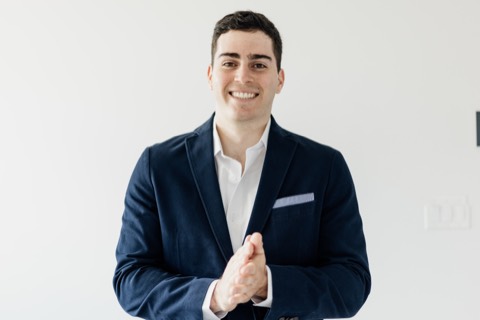
One page for the whole team: the firm's vision, the current sprint, every seat's responsibilities through the year, and the training to grow into them. If you have a question about the firm, start here.
The firm runs in sprints. This block changes every sprint retro — everything else on this page is stable. From the 2026 Sprint 3 OKR plan; one objective per owner, key results beneath it.
Current sprint2026 Sprint 3JUL 6 – 31Present, sell & secure the firm — every seat has one objective and binary key results.
AZ — Present & sell the firm; lead AI adoption
Redesign the meeting cadence + make the training hub public (this site)
Rebuild all five core service offers for the new website
Every proposal ships with the engagement letter attached
AZ
Branson — Security posture + tax tooling
Verito vs. Rightworks comparison + VPN decision, documented
Franchise report view + client organization list built; key properties current
Teresa — Offboarding, compliance & the firm's own books
Retired-client packet built & sent; LLC dissolutions closed with SOP
1099 SOP enhanced; all IRS/state notices compiled (PII redacted)
Take over AZDT's internal bookkeeping & billing; doc-mgmt/AP software review
TERESA
August — proposed
Teresa: implement 1Password + Google Voice firm-wide
Whole team: certified in Canopy University
LOCK AT SPRINT 3 RETRO
The bottleneck we're killing (2025 retro): "Returns get handed off half-completed — game of telephone, reinventing the wheel." Every initiative above either kills that risk or builds the capacity to kill it.
Where we're heading
The Vision & the Roadmap
"We are a high-trust, content-led tax and accounting firm. We deliver on time, every time, respond promptly to every client inquiry, and move steadily away from hands-on grind toward strategic advisory and content-driven growth."
What we're moving away from: standalone bookkeeping and LLC-maintenance work. Existing retainer clients are served impeccably, but the firm's growth energy goes to tax and advisory.
The North Star — every goal maps to one of three themes
In a 1-on-1, every individual goal should map upward to a theme. If it doesn't map, question whether to do it at all.
01
Build the Marketing Engine
3+ email campaigns live
Weekly social cadence
Affiliate program revenue
02
Operational Excellence through Individual Leadership
Every checklist runs without AZ
Every playbook owned by one person
Meeting cadence in lockstep
03
Define Our Strategic Foundation
Quotes finalized, billable rates set
Canopy is the single project hub
Roles clear to every team member
Sprint roadmap
Done
OCT 20–31, 2025
Launch Marketing Engine
3 campaigns activated
Individual checklists
706 + 990-PF playbooks v1
Done
NOV 3–26, 2025
Marketing + Dept Roles
Affiliate program
Difficulty tagging
Forecast model
Done
JAN 1–15, 2026
YE + Season Kickoff
YE prep complete
Firm calendar scheduled
Biz tax prep starts
Done
MAY 1–29, 2026
L10 + Franchise + AI
L10 owned per track
State franchise playbook
EA / CFP plan
Closed
JUN 2026
Menu Consolidation + Build
Service menu consolidated
Playbook + AI groundwork
Now
JUL 6–31, 2026
Present, Sell & Secure
New meeting cadence + public training hub
Service offers rebuilt for website
Security + software reviews
Teresa owns AZDT books
Proposed
AUG 2026
Tooling Rollout
1Password + Google Voice (Teresa)
Team certified in Canopy University
Extension queue staged for 9/15
How we operate
The Team Operating System
Non-negotiables
1We do not respond after working hours.
2Move toward content; away from hands-on grind.
3Cultivate referral relationships — especially financial advisors.
4Deliver on time, every time.
5Respond promptly to every client inquiry.
The meeting rhythm
Day
Meeting
What it looks like
Monday
Starting Lineup · 10:00–10:45
The whole team sets the week: priorities per seat, blockers surfaced, sprint check-in. The week's game plan comes out of this room.
Tue & Wed
Daily Stand-up · 10:00–10:15
Fifteen minutes, "one thing" focus. Stand-ups don't get hijacked — one thing means one thing.
Thursday
Weekly 1-on-1s
AZ meets each team member individually — goals, roadblocks, growth path.
Friday
No meetings
Protected for deep work and self-paced training. No client calls, no internal meetings.
Daily
The Daily Dunk
Teresa checks the help desk and mail every day, no exceptions. Every client request captured and routed to its owner in Canopy.
Per sprint
OKR Sprint Retro
Score the sprint, log CPE credits, plan the next one. This page gets refreshed here.
The routing rule: if a client request doesn't match a service line on the ownership map, it's either (a) a new offering AZ needs to price, or (b) outside our scope — and we say so kindly. We do not accept work that has no owner.
The stack
Canopy · project management, tickets & client portal — the single hubSlack · team comms & stand-upsIntuit ProConnect Tax Online · tax prep1Password · credentials & securityQuickBooks Online · client booksGusto · payrollGoogle Voice · phone — rolling outClaude · AI workflows, skills & the Company Brain
Who we are
Five Seats, One Team
Every seat has a manager, a set of critical accountabilities, and the playbooks it owns. Headshots land in round 2 — assets/photos/team/.
AZ Moyer
CEO · Manager: self · CPA
Sales & Strategic Foundation$250/hr
Close new clients — sales calls on the script, quotes through close
A CPA firm doesn't run on an org chart — it runs on a calendar. Below: the twelve-month pressure map, then each seat's season-by-season reality. Use it to plan capacity, EA study, sprints, and vacations.
Jan Peak
1/15 Q4 est · 1/31 W-2, 1099, 940, 941-Q4 · season emails launch
Feb Peak
Individual prep ramp · season reminders 1 & 2
Mar Peak
3/1 DE franchise · 3/15 1120S, 1065, K-1s, 2553
Apr Peak
4/15 1040, 1120, 1041, Q1 est, IRA · 4/30 941-Q1
May Busy
5/15 TX franchise, 990 · post-season retro
Jun Busy
6/15 Q2 est, FBAR · mid-year email · EA study window
Jul Build
7/31 941-Q2 · planning email #2 · build season
Aug Build
Light filing · pre-extension prep
Sep Peak
9/15 Q3 est + extended 1120S/1065/1041
Oct Peak
10/15 extended 1040 + 1120 · 10/31 941-Q3
Nov Busy
11/17 extended 990 · YE reminder emails
Dec Busy
12/31 charitable, 401k, SEP, RMDs · YE payroll/1099 prep
Capacity rule of thumb: OKR sprints land best Jun–Aug · EA exam parts in Jun/Jul/Aug · new services launch in Sep · content campaigns ship Oct–Dec so they're working when leads search in Jan.
Pick a season — see everyone's week
Client deliveryCompliance deadlinesFirm buildingGrowth & training
The year opens at full throttle: 1099s and W-2s due in 31 days, the new onboarding cohort arriving, and the tax-season email machine turning on.
Pipeline season. New-year leads, renewals, and kickoff emails all fire at once — mornings on sales calls, afternoons on escalations and keeping the firm calendar honest.
40%30%20%
Branson
Tax
Q4 estimates out by the 15th, then the prep queue starts filling. January is when the K-1 trackers get set up right — or reviewed painfully in March.
35%40%15%
Isaac
Books + Mktg
Year-end close for every retainer plus the 1099 data hand-off to Teresa — the two January jobs that everything downstream depends on. The tax-season email sequence he built in December starts shipping.
40%35%15%
Teresa
Client Success
The heaviest compliance month of her year: W-2s, 1099s, 940, and 941-Q4 all due 1/31 while the new client cohort onboards. Daily Dunk never skips.
30%50%
Finn
Tax Manager
Pre-season setup: review checklists finalized, whale client files staged, early complex work started before the queue floods in February.
40%20%25%15%
Heads-down season. The firm's on-time guarantee is won or lost here. Two walls: entities on 3/15, individuals on 4/15.
3/1 DE franchise3/15 1120S, 1065, K-1s, Form 25534/15 1040, 1120, 1041, Q1 est, IRA
AZ
CEO
Sales keeps moving even in season — plus review escalations and retainer meetings. The discipline: protect the pipeline while everyone else is underwater.
45%35%
Branson
Tax
The prep queue is the job: PTO all day, client questions routed through tickets, notices triaged fast. EA study pauses; the season is the education.
65%25%
Isaac
Books + Mktg
While the tax side sprints, the books engine cannot slip — month-end close on schedule, prep data pulled for the tax team, marketing on minimum viable cadence.
60%20%
Teresa
Client Success
Peak routing season: every "where's my return?" lands in her queue first. S-corp elections beat the 3/15 cutoff, DE franchise by 3/1, billing never pauses.
45%35%
Finn
Tax Manager
The review queue is life: returns flagged by Branson, whale work-in-progress, and the judgment calls nobody else can make. Highest-leverage seat in the building right now.
70%20%
Exhale, then rebuild. The retro happens here, franchise season lands, and the firm's best thinking window opens.
4/30 Form 941-Q15/15 TX franchise, Form 9906/15 Q2 estimated tax, FBAR
AZ
CEO
Post-season retro, pricing review ("do quotes still reflect actual scope?"), and the sprint plan for summer. Advisory delivery picks back up for quarterly clients.
35%15%35%15%
Branson
Tax
TX franchise by 5/15, Q2 estimates by 6/15 — then the EA study window officially opens. June/July/August is when exam parts get scheduled and passed.
30%35%15%20%
Isaac
Books + Mktg
Books get a cleanup pass, campaigns restart for real, and the QBO recertification window (4/28–6/30) cannot be missed. Marketing shifts from maintenance to build.
45%30%15%
Teresa
Client Success
941-Q1 by 4/30 and TX franchise mid-cycle work, then the operational projects that season buried — document system rollout, HubSpot hygiene, engagement letter audits.
40%30%20%
Finn
Tax Manager
Post-season cleanup on complex returns, then the seat's real growth season: playbook authoring, research deep-dives, and the quarterly team training session.
30%35%25%
Two seasons in one: July–August is build season (we are here now); September–October is the second tax season. What gets built in July decides how October feels.
7/31 Form 941-Q29/15 Q3 est + extended 1120S, 1065, 104110/15 extended 1040 + 1120
AZ
CEO
The system-building window: AI workflows into production, playbook library shipped, Box decision made. Sales continues; escalations spike as extensions come due.
30%15%45%
Branson
Tax
Extension queue triaged early, whale depreciation templates finished before September, then the 9/15 and 10/15 walls. Q3 estimates ship mid-wave.
45%30%15%
Isaac
Books + Mktg
His biggest build season: website v2, editorial calendar, segmented email — the content engine the firm's growth thesis depends on. Books stay on rails underneath.
40%40%
Teresa
Client Success
941-Q2 by 7/31, then extension-season routing: document chasing, client nudges, billing on everything shipping. Gusto certifications fit in the July lull.
45%20%20%15%
Finn
Tax Manager
The extension review queue is smaller than spring's but heavier per return — the hardest files got extended. Whale WIP and the toughest judgment calls of the year.
50%25%15%
The quiet-looking quarter that decides next year: tax planning for clients, OKRs and pricing for the firm, and the January machine built in advance.
10/31 Form 941-Q311/17 extended Form 99012/31 charitable, 401k, SEP, RMDs
AZ
CEO
Annual OKRs, every retainer renewal and price adjustment, year-end planning meetings, and the strategic offsite. January is scheduled before December ends.
40%15%30%15%
Branson
Tax
Year-end planning support — S-corp comp checks, estimated tax true-ups — plus the annual tax law update brief and a final EA push before season resets the clock.
25%15%35%25%
Isaac
Books + Mktg
The year-end content campaign (charitable, retirement, RMDs) ships while YE prep checklists start for every retainer. December builds the January email sequence.
40%20%25%15%
Teresa
Client Success
W-9 collection from every contractor before the January crunch, 941-Q3, state account renewals, and YE payroll prep. The smoothness of her January is decided in November.
35%30%15%20%
Finn
Tax Manager
Final reviews on 706 and 990-PF work, the year-end tax law presentation to the team, and the review playbook updated with everything the year taught.
30%35%25%
Time allocations are directional (share of a typical week), drafted from the responsibility grids — review with each seat at the next 1-on-1.
What we stand for
Core Values
"We help people handle difficult, stressful financial situations with grace — while not allowing their urgent matters to become our emergencies."
01
Trustworthy
Clients hand us the most sensitive numbers in their lives. We earn that every day.
02
Bold
We take positions, price with confidence, and build the modern firm others watch.
03
Authentic
No script-reading, no pretending. Real people doing real work for real people.
04
We Give a Damn
Care is the differentiator. It shows in the follow-up, the deadline met, the extra call.
The operating principles behind them
Fail Fast, Learn Faster.Catch errors early — mistakes compound in accounting. Fix, learn, build the system so it never recurs.
Control the Controllables.Focus energy on what you can influence. Adapt to external change while holding our standards.
Be Here Now.Give clients and teammates full attention. Reliability is our superpower.
Ethical Excellence."Pigs get fat, hogs get slaughtered." Legitimate deductions, fair pricing, the right thing when no one is watching.
Know the Fundamentals.Debits and credits, clean books, basic frameworks — the difference between good and great.
Time Blocking.Schedule focused blocks for single tasks; treat them like appointments with yourself.
Work to Live, Not the Other Way Around.Work supports your life; it should not consume it.
Ask before you interrupt
The Company Brain
Every playbook, SOP, and firm answer — in one conversation.
We're building the AZDT Company Brain in Claude: it knows our playbooks, SOPs, service offerings, pricing, and this page. Before you ping AZ or dig through folders, ask the Brain. If it doesn't know, that's a gap we fix — tell AZ so the answer gets added.
“How do I…” file an S-corp election, run the month-end close, send a return for signature
“What's our…” price for a 1040 + Schedule C, policy on after-hours replies, PTO process
“Where's the…” engagement letter template, 1099 SOP, review checklist
“Draft me a…” client email about Q3 estimates, notice response, meeting agenda
Growing the team
Training & Development
The habit that carries everything: the Friday deep-work block. Fridays have no meetings — protect one hour of it for your training path. No client work, no Slack, no email. After 12 weeks, every seat has 12 CPE credits and real certification progress.
AZ
Model the system, stop discounting
Canopy University — admin track
Jason on Firms — AI playlist
Realize firm-owner community
Branson
ProConnect power user → EA
Intuit ProConnect learning path
IRS SEE prep (Gleim or Becker)
Tax Practice Pro specialty CE
Isaac
QBO certified + content engine
QBO ProAdvisor Foundation L1 + L2
Canopy University
Content & SEO track — links being refreshed
Teresa
Payroll certified, ops unblocked
Gusto Payroll Certification (4 CPE)
Gusto People Advisory (5 CPE)
Canopy University + 1Password rollout
Finn
Technician → partner candidate
Author the Review Checklist Playbook
CPAacademy + Earmark (free CPE)
Partner bookshelf, one chapter/week
Everyone
Firm-wide baseline
Canopy University certification — August sprint
Log CPE at every sprint retro
Friday deep-work block: one path module/week
The complete resource library — every platform, every certification, every link, ordered per seat — lives in the AZDT Team Training Library. Video and course links are being refreshed for the new learning tracks — AZ is dropping in live links this round.
Reference shelf
The Documents Behind This Page
This page is the map, not the territory. Deep detail lives in the source documents — links go live in round 2 once we pick their permanent home (Box).
Team Operating System
Vision, per-person cadences, sprint roadmap, bottlenecks — the full OS.